AI for RFP responses: how it works and where it falls short
An RFP response isn't one document — it's five or six, each drawing on different sources spread across your organisation. The information exists. Getting it into the right format, tailored to this RFP's requirements, by ...

An RFP response isn't one document. It's five or six: executive summary, technical approach, team CVs, case studies, pricing, compliance matrix. Each section draws on different sources — past proposals, internal capability statements, project portfolios, staff profiles, reference letters. The information exists. Getting it into the right format, tailored to this RFP's specific requirements, by the submission deadline, is the production problem.
That production problem is where AI makes the biggest difference — not by writing your proposals for you, but by collapsing the time between "we have the source material" and "we have a draft."
Where the time actually goes
The manual proposal workflow has several distinct phases, and they don't all consume time for the same reason. Requirements analysis — reading the RFP and extracting what's actually being asked — is covered in our post on AI tender analysis. Assuming you've cleared that step and decided to bid, what follows is typically: tracking down source material from different people and systems (a day or more on complex bids), drafting sections that match the RFP's structure (another day), internal review cycles (a day, often compressed), and a final compliance check before submission.
The source material gathering and first-draft phases are where the most time is lost on work that doesn't require senior judgement. Someone needs to find the right case study, pull the relevant team CVs, locate the last proposal that answered a similar methodology question. That's retrieval work, not strategic work — and it's what AI handles well.
What AI does well in proposal writing
The most effective AI-assisted proposal workflows are built around a knowledge base: a structured collection of your past winning proposals, capability statements, case studies by sector and contract size, team profiles, and standard compliance clauses. Load that into a Claude Project, and you can query it the way you'd query a well-organised colleague who has read everything.
In practice, this enables a few things that change the production timeline. First, requirements-to-capabilities mapping: given the RFP's scoring criteria and technical requirements, the system can identify which past projects and which team members are most relevant to cite — specific, not generic. Second, first-draft generation for structured sections: methodology descriptions, team introductions, and approach narratives that follow the RFP's section structure, drawing on actual past content rather than templated boilerplate. Third, compliance checking: cross-referencing the final draft against the RFP's requirements list to identify sections that haven't been addressed or word limits that have been exceeded.
The output still needs human review and editing — and that's by design. What you're buying is not a finished proposal, but a credible first draft that's 60–70% of the way there, built from your actual best work, produced in hours rather than days.
What AI doesn't do
Three things that still require human input, and where shortcutting them shows in the final proposal.
Differentiation. The parts of a winning proposal that demonstrate genuine understanding of this client's specific situation — their organisational context, the political dynamics behind the RFP, what they're really trying to solve — don't come from a knowledge base. They come from relationships and research. AI can draft around what you tell it, but it can't generate the insight itself.
Pricing strategy. What to charge, how to structure the pricing, where to be aggressive and where to leave margin — this depends on competitive intelligence and client knowledge that isn't in your document library. AI can help structure a pricing narrative once the numbers exist, but the numbers themselves are a human decision.
Review quality. An AI compliance check catches structural gaps. It doesn't catch a methodology section that's technically complete but unconvincing, or a case study that's technically relevant but doesn't land well for this particular evaluator. That judgement requires someone who understands the client and the evaluation context.
The architecture that works
A practical setup for a team that responds to five or more RFPs per month: a Claude Project loaded with your 8–10 best past proposals (anonymised where necessary), your standard capability statement, case studies tagged by sector and contract value, team CVs in a consistent format, and any standard compliance or methodology documents you reuse across bids.
The workflow becomes: extract requirements from the RFP (link to tender analysis post), map them against the knowledge base, generate section drafts, route to the relevant subject matter expert for each section for a targeted review rather than a full rewrite, run a final compliance check, and submit. The senior bid writer's time shifts from drafting to editing and differentiation — which is where their expertise has the highest impact.
The measurable gain isn't "300% more proposals submitted" — that kind of number requires context to mean anything. The measurable gain is: time from bid decision to first draft, down from two days to four hours. Senior staff hours per proposal, down by half. Coverage of requirements in the first draft, up significantly because the compliance check catches omissions before review rather than after.
Spending too much senior time on proposal production?
We build AI-assisted proposal workflows for teams that respond to tenders and RFPs regularly — structured around your existing knowledge base, integrated with your bid process, and designed so the human review step is targeted rather than exhaustive. If you're evaluating whether this fits your team's situation, a scoping conversation is the right starting point.
Let's talk about your bid workflow →
Drawing from over 20 years of expertise as Fractional innovation Manager, I love bridging diverse knowledge areas while fostering seamless collaboration among internal departments, external agencies, and providers. My approach is characterized by a collaborative and engaging management style, strong negotiation skills, and a clear vision to preemptively address operational risks.
No guesswork.
No slide decks.
Just impact.
Ready to move from AI hype to a working system? In a free 30-minute call we'll identify your highest-impact use case and tell you exactly what it takes to get there.
No upfront cost · Italy · Malta · Europe · English & Italian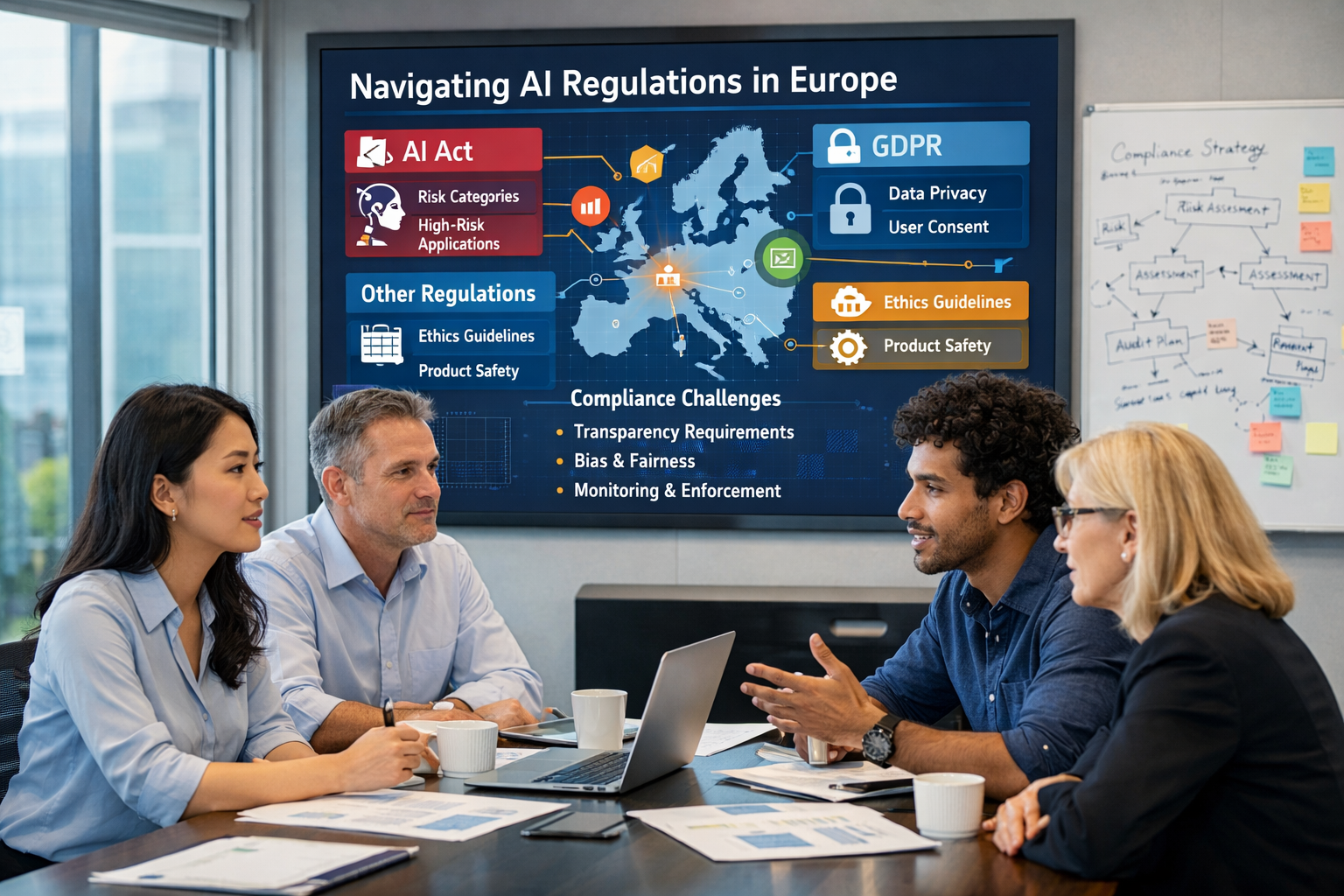
The EU AI Act is already in force. Italian Law 132/2025 is live. GDPR now explicitly covers automated decisions. If you deploy AI in your ...

The boundaries between conversation and commerce are about to disappear. In a groundbreaking partnership, OpenAI and Shopify are developing ...
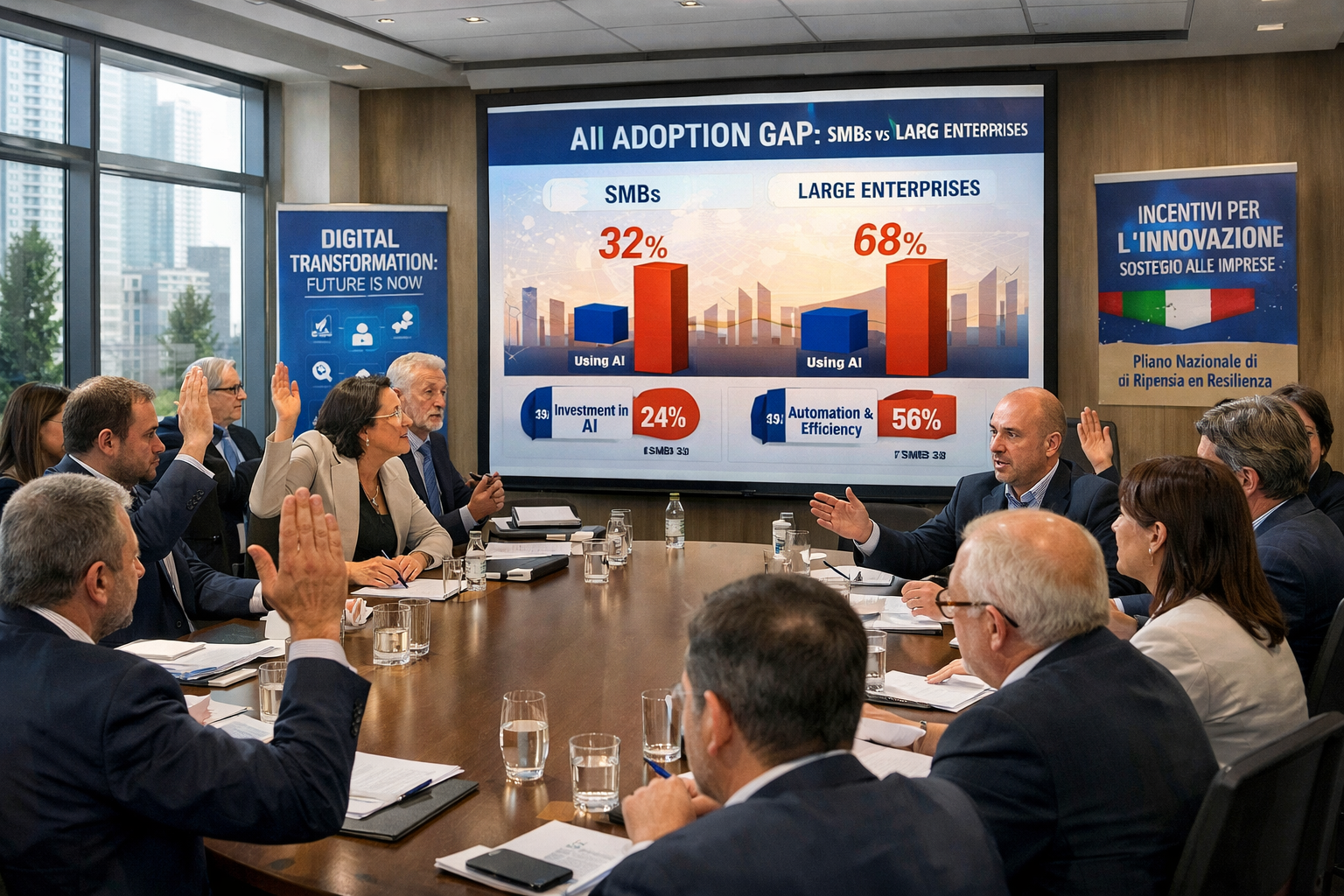
Italy's AI market grew 58% in 2024. The share of Italian SMBs that have actually started an AI project sits at 15% for mid-sized companies ...